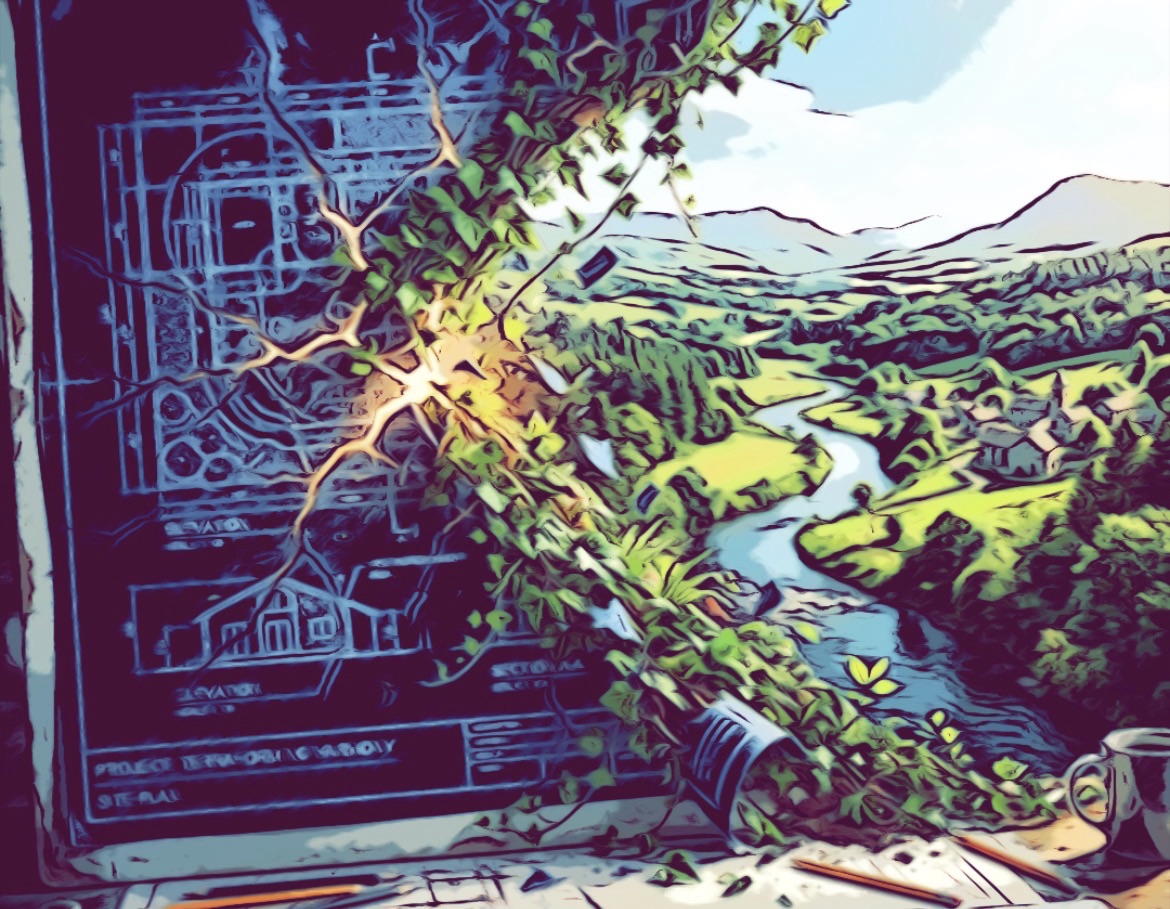
Utopia Lost in Language: Rethinking the Politics of Possibility

What if utopia isn’t a perfect place—but a way of thinking and acting, in common?

For many people, the word “utopia” conjures images of unrealistic fantasies, naïve idealism, or even dangerous political experiments gone wrong. In everyday conversation, it often means something impossible: a dream that can’t be realised. But this understanding is deeply misleading—and more importantly, it limits our political imagination at a time when we need it most.

Rather than being a fixed blueprint for a perfect society, utopia can be understood as a political technique and a shared language for exploring social possibilities. Utopia is not simply a destination; it is an activity. It lives in how we imagine, question, critique, and attempt to transform the world around us.

Utopia as Practice, Not Blueprint

The problem begins when utopia is reduced to a picture: a finished model of “the good society.” These static visions—whether architectural masterplans or literary dream worlds—tend to close down discussion rather than open it up. They present a completed answer rather than an ongoing process.

But utopia, at its most powerful, is something else entirely. It is what happens when people begin to ask: what could be different? It is the act of imagining alternatives and bringing those imaginings into public conversation. In that sense, utopia is always grounded in the present. It is something we do, not something that is only dreamt about. Crucially, utopia does not fail because people imagine too much, as anti-utopians (like Gray, 2007) claim. It fails when imagination is suppressed—when social conditions discourage some people from thinking beyond what already exists. The real danger is not utopian dreaming, but absence of it.

The Problem with How We Talk About Utopia

Part of the difficulty lies in language. We often talk about utopia in ways that create confusion or shut down debate. For instance, utopia is frequently treated as synonymous with a “perfect world.” This conflation ignores the richness of utopian thinking and reduces it to a narrow ideal. Similarly, the common opposition between “utopia” (good) and “dystopia” (bad) oversimplifies matters. It suggests that utopian thinking is naïvely optimistic, while dystopian thinking is realistic or critical.

In reality, both are part of the same process. Dystopias are not anti-utopian—they are warnings, critiques, and provocations. They show us what could go wrong, often in order to spur us into action. Likewise, many so-called utopias contain elements that are troubling or exclusionary. Even the term “apocalypse” is misunderstood. Commonly associated with destruction, it simply means “revelation.” Apocalyptic thinking can reveal hidden truths about society and provoke transformative change. If we want better conversations about society and its future, we need a more flexible and inclusive language of utopia—one that reflects its diversity and its role as a tool for inquiry.

A Broader View: Utopia as an Umbrella Concept

Instead of treating utopia as a single idea, I consider it as an umbrella term covering many different kinds of imaginative activity. Under this umbrella, I include:

  • Eutopias: visions of better (‘good’) societies
  • Dystopias: warnings about impaired or failing worlds
  • Arcadias: nostalgic longings for a lost past
  • Apocalyptias: visions of transformation or revelation

Each of these expresses a different relationship to time—past, present, or future—but all are rooted in the present moment of imagination and action, in the Utopian thinker. This broader approach allows us to see utopian thinking everywhere: in political movements, philosophical arguments, cultural narratives, and everyday moral decisions.

The Utopian Imagination in Action

One of the most important aspects of utopian thinking is its connection to imagination. This is not just about fantasy; it is about the ability to place ourselves in different situations and perspectives.

Adam Smith (1759), for instance, argued that we make moral judgments through “indirect sympathy” (VII. iii. I. 3)—our capacity to imagine what it feels like to be someone else. This imaginative leap allows us to evaluate social arrangements, even those we have never experienced. To judge something like private property, we need the capacity to imagine a world where private property doesn’t exist. That “no place” (or not yet) is precisely where utopia operates: as a space of critical reflection. In this sense, utopia is not escapism. It is a method for understanding the present by imagining alternatives.

Is Dystopia Really So Bad?

If we rethink utopia in this broader sense, the boundary between utopia and dystopia starts to blur. Take dystopian fiction (a la Huxley and Orwell). These narratives often depict bleak or oppressive worlds—but they also rely on imagination, critique, and the possibility of change. In fact, dystopias can be powerful tools for political engagement, forcing us to confront uncomfortable truths and consider how things might be different (new possibilities).

Even the idea of a “perfect” society can be troubling (see Zamyatin’s [1924] We). A society that eliminates imagination or dissent in the name of stability risks becoming stagnant or oppressive. In this context, a flawed, changing world may be preferable to a static “perfect” one. This raises an important question: is it better to live in an imperfect world where change is possible, or a perfect one where nothing can ever change?

When Utopia Becomes Stagnation

A key danger arises when a utopian vision becomes fixed—what we might call an “autotopia,” a system that simply reproduces itself endlessly. In such a world, imagination is seen as a threat (as with Zamyatin’s OneState). Stability becomes the highest value, and any deviation must be suppressed. This can happen in political systems, economic structures, educational practices, or even cultural norms.

The irony is that a “perfect” system can become lifeless. Without the possibility of change, critique, or innovation, it loses the very qualities that make social life dynamic and meaningful. Human beings are not like machines that can simply repeat the same patterns indefinitely. We are imaginative, questioning, and creative—and any society that ignores this, risks becoming deeply alienating.

Utopia and Capitalism

Utopian thinking is not limited to radical or revolutionary ideas. It also operates within and reproduces existing systems, including capitalism. Karl Marx’s (1867) description of the capitalist marketplace (at the beginning of Capital), for example, can be read as a form of utopia: a world of perfect equality, where individuals freely exchange goods and “mutually recognise” (Chp2) each other’s rights. This “ideal” (abstracted) version of capitalism purposely strips away real historical social inequalities like slavery, xenophobia, racism, or sexism—it is a theoretical version of how capitalism could / should work.

Of course, Marx’s point was that even with this idealised scenario (a vision reformers strive for), exploitation persists (see Bonefeld, 2023). The system still depends on unequal outcomes, despite its language of fairness and equality. This demonstrates how utopian thinking can be used critically. By imagining a system in its purest form (not its contaminated reality), Marx exposes its contradictions and limitations.

At the same time, this exposition (process) highlights how defenders of capitalism rely on utopian ideas—promoting visions of innovation, growth, and progress. Utopia, then, is not owned by any one ideology. It is a shared tool, open to all. Utopia is a process we all take a ‘risk’ in promoting.

Why Utopia Matters Today

We live in a time when utopia is often dismissed as unrealistic or dangerous. But this dismissal has consequences. Without utopian thinking, we run the alternate risk of accepting the status quo as inevitable. We lose the ability to imagine alternatives, to critique existing systems, and to strive for something better. Thus, utopia, understood as a technique and a language, is essential for democratic life. It allows us to explore possibilities, challenge assumptions, and engage collectively in shaping the future. Importantly, this is not the task of a select few (e.g., the utopian ‘novelist’). Utopian thinking should not be confined to writers, philosophers, or political leaders. It should be communalised: open to everyone.

Reclaiming the Language of Possibility

In conclusion, if utopia has been “lost” it is not because the idea itself has failed. It is because our language around it has become restrictive and confused. To reclaim utopia, we need to broaden how we talk about it. There is a need to recognise its diversity, its flexibility, and its presence in everyday life.

Above all, we need to see utopia not as a distant dream, but as an ongoing practice—a way of engaging with the world and imagining how it could be different. Because the future is not something that simply happens to us. It is something we create. And utopia, in all its forms, is the language through which that creation begins.

References:

Bonefeld, W. (2023) A Critical Theory of Economic Compulsion: Wealth, Suffering, Negation London: Routledge.

Gray, J. (2007) Black Mass: Apocalyptic Religion and the Death of Utopia. London: Macmillan.

Marx, K. (1867) Capital: A Critique of Political Economy. Vol. 1. Pelican Library. [1976 edition; trans. Ben Fowkes]. Harmondsworth: Penguin.

Smith, A. (1759) Theory of Moral Sentiments. [2012 edition; edited by Knud Haakonssen]. Cambridge Texts in the Philosophy of History. Cambridge: Cambridge University Press.

Zamyatin, E. (1924) We. [1993 edition; translated by Clarence Brown]. Harmondsworth: Penguin.

Links:

This is a shortened (blog style) article of a 6,000-word essay with the same argument (fully referenced with direct quotations).  This longer version can be found at:

McGrail, B. A. (2026) Utopia Lost (in Language): Rethinking Utopia and the Politics of Possibility [PDF] (14 pages / 28 minute read). Available at: Utopia Lost (In Language): Rethinking Utopia and the Politics of Possibility

Acknowledgments:

An earlier (2024) version of this blog (and essay) was written in response to (and participant / presenter in) the Arts & Humanities Research Council (ARHC) funded Workshop Series on Utopia and Failure, organised and led by Prof. Mathias Thaler (Edinburgh), Prof. Davina Cooper (KCL), and Dr Ruth Houghton (Newcastle). I received essential and supportive feedback from Mathias, Davina, and Ruth, to whom I would like to express my gratitude.  The usual disclaimers apply.

AI? Should any Student ever Trust it?

The Labyrinth, the Ghost & Lost Intellect

If you are a student, should you ask / prompt generative artificial intelligence (AI) to write your essays?  Why would you risk doing that?  What would be the equivalent in a time before computers? Would you let Jorge of Burgo write your essay or help you to plan it?

Umberto Eco’s mediaeval murder mystery, The Name of the Rose (1980), is centred around a monastic library which contains dangerous, unorthodox texts.  Certain books are deemed dangerous because they make monks laugh like apes and (spoiler alert) for Brother Jorge of Burgo, the killer, such laughter defiles God’s glory and creation whilst making a mockery of penitence and the penitent.  But without the latter no-one will be entering heaven.  The story culminates in the burning down of the library.

Now, apparently (I’ve not checked myself), if you ask the Chinese AI bot Deepseek anything about 1989 and Tiananmen Square it ignores whatever you are asking (in relation to suppression of dissent) and, instead, provides you with tourist information on the square! Has Brother Jorge arisen from the mediaeval dead to stalk the networks of AI databanks?

The Library as Labyrinth

The library’s contents in Eco’s novel are guarded by a ‘reading room’ (scriptorium) system where the depository and its shelves can only be accessed by officially sanctioned librarians (including the Abbot, the  Keeper, and the latter’s assistants or trainees).  These bring requested books to monks in the scriptorium where copies of books are created for other libraries and monasteries.  It can be assumed these monks would also make copies going in the opposite direction (books coming from elsewhere), adding to the monastery’s existing collection.  The library is famed as one of the best in Christendom, but the extent of its collection is ‘unknown’ – a knowledge kept by, and limited to, those able to peruse the depository shelves.

Such a library was the mediaeval internet and many parallels can be drawn.  Its sanctioned librarians are the search engines – they not only retain lists of the library’s contents, but know where to find and collect works, bringing selections of knowledge to copyists’ and readers’ attention.  The latter would either know, already, what work they wanted, or would have to rely on recommendations from librarians for related, complimentary, or enhancing pieces on a subject.  And, of course, trust would be central.  A copyist might know of a book but a librarian could say the library does not have the work even though it does!

At the same time, the librarians are a ghost in the team-spirit sense – they share knowledge amongst themselves and in doing so the ethereal (beyond the individual) consciousness of any item would make it hard to hide (given every librarian who knows about it has to be involved in the subterfuge for successful censorship).  Yet, each librarian (search engine) has a unique ‘algorithm’, leading them to tackle their job in a different manner and producing a highly specific map of ’the library’, especially in terms of prioritising what is and is not an important work (for those in the scriptorium or outside the library to know about).  Consequently, there are, in effect, multiple libraries – as many as there are ways (maps) to access the contents.

As a retired, previous Keeper, Jorge of Borgo has used his extensive knowledge to not only hide certain works (placing them in the ‘wrong’ locations) but failed to share the location of secreted rooms within the library.  Whole areas of knowledge are locked away, except to Jorge.  When the novel’s hero, the detective Franciscan Brother William, eventually gains access, he discovers the library is a mind-blowing extensive labyrinth; a maze with numerous small rooms connected to a central staircase but in a confusing and seemingly random fashion.  As an outsider, he and his assistant quickly become lost and struggle to find their way out.  William has deduced that all the murders in the monastery are linked to the library and to specific books the murdered monks had seen, read, worked on, or delivered to the scriptorium. 

Given the library’s labyrinthine nature, the instigation of the murder series was a chance happening – the accidental discovery by a junior librarian of one of the secreted rooms and, within it, Aristotle’s (in)famous defence of laughter, which Jorge of Burgo had suppressed.  The junior librarian could not keep the discovery to himself and joyously shared knowledge of Aristotle’s ‘lost’ work with other young monks forcing Jorge to employ dastardly means to restore order.

The Librarian as Data ‘Censor’

That internet search engines act as surreptitious ‘censors’ is well known.  Based on computational algorithms these ‘dumb’ machines do not understand the concept of ‘censorship’ and merely scour and scrape the world’s largest dataset looking for similarities in keywords and strings of letters.  They are more sophisticated in searching for statistically approximate keywords, which is helpful when the searcher mistypes (or does not know how to spell) the subject they are looking for.  But they problematically throw up hundreds, thousands, even millions of results with only the most ‘popular’ discoveries appearing on the first few pages.  And since the commercial search engine providers require an ‘income’, paid for advertisements feature at the very top, even before the most popular (or statistically ‘likely’) ones.  Wikipedia does offer ‘disambiguations’ as part of its search to cover single words (and especially people’s names) having multiple meanings, versions, or instances.  And all search engines provide advanced ‘Boolean’ search functions, though these then require seekers to have advanced, prior knowledge of what they are seeking.

Consequently, conventional digital ‘search engines’ make for pretty dumb (i.e. mute) librarians, especially as they cannot ‘converse’ with nor question the person making the search and rhetorically work towards a solution.  Obviously, human librarians can offer such investigatory interactions, but what they offer by way of interlocution is a product of their socialisation and culture, along with their conception of philosophical meanings of life, society, history and teleology.  Questioning Jorge about the presence and then meaning as well as usefulness of Aristotle’s defence of laughter would produce a very different conversation than one held with Brother William.  And a ‘composite’ interlocutor, the synthesis of knowledge within Jorge and William would always be confronted about how to ‘merge’ mutually exclusive arguments (laughter is evil / laughter is good).  In that manner, a composite interlocutor is just another interlocutor – it might only sit ‘above’ any other in having a more extensive perspective, but history, on occasion, has shown regression in knowledge accumulation as well as progression.

In summary, librarians and search engines perform a ‘censorship’ function whether they like it or not – selections and choices have to be made and prioritised, based on the parameters (passions, drives, reasonings) programmed into the ‘engine’ and its algorithms (or the librarian and their habitual thinking).

The Mediaeval Copyist as Data ‘Generator’

Yet, the role of the librarian in helping to form and reform societal knowledge is but one element to be taken from the story (and analogy) of the mediaeval monastic library.  Another key element, of course, is that of the scribe, editor, or ‘copyist’ (the ‘file transfer’ and/or ‘translator’ function in digital terms).  The monks working in the scriptorium might aim to ’copy’ (reproduce) the work in front of them but examples of their work indicate that even when copying a text (when keeping to the same language) they made ‘errors’.  If their copy was then copied, the first copyist’s error might be ‘copied’ accurately, whilst at the same time new ‘errors’ could creep into the work, and so on.

Such errors could be basic: a miscopied word where the error would be obvious to any future reader or copyist.  However, errors involving confusion over words with multiple meanings or spellings would create more complex scholarship and interpretation issues.  Over time, passages could become corrupted ‘code’.  When copyists come across an error there could be several ways to correct the problem, such as attempting to compare the copy with an original (so long as one knew which work was the ‘original’).  Indeed, academic scholarship has become defined by questions of what to do about errors on discovering them and the requirement for discussion around options and competing resolutions.

In conventional digital networks, the editorial role was still played by those adding content to the network.  Even in a ‘free for all’ – no controls on entry – system (such as Twitter, formerly known as ‘X’), where there is no centralised censor (such as Jorge), the quality of the library content is determined by the quality of what people put into it.  Misunderstood misrepresentations of others’ work flowing into the ‘big data’ cauldron produces a depository of corrupted information.  But poor quality human ‘input’, and it’s corollary in ill-informed and biased human ‘editing’ and ‘editorial control’, may well now be the least of our problems.

In the world of generative artificial intelligence (Gen AI) the core problem might not be poor ‘copying’, ‘editing’ or ‘writing’ (though even with digital recordings, like CD, ‘error correction’ systems had to be built into playback software to cope with some level of data corruption).  Rather, what happens when AI systems keep discovering ‘new’ works within the system itself (no ‘input’ nor ‘editorial’ gatekeeping required) which are nothing more than ‘new’ statistical summaries (made by the AI engine) of previous data devoured by a large language model (LLM)? 

Should such internally-generated ‘additions’ be treated as significant ‘new’ works which nurture and enrich the library or as bodily waste-products to be flushed away as quickly as possible?  Even worse is the issue of hallucination, when generative AI machines start creating citations and sources which never existed.  A system user may quickly work out that the information offered is false (in this case meaning ‘generated’ with very different connotations), but then they may not and end up unknowingly ‘citing’ some fictitious work (or ‘case’ as some young lawyers have recently been caught doing).

The Librarian as Essay ’Author’

It was not the primary role of monastic scribes and librarians to write new works.  Some would develop, through rigid rhetorical processes, and become senior office holders within rigid academic structures – the mediaeval university with its hierarchy of professorial chairs (logic > natural philosophy > moral philosophy > theology) where those deemed most worthy would study divinity.  These few would become permitted or sanctioned scholars with a licence to lecture and write new works.  Jorge of Borgo, of course, was circumventing that process of learning through rhetoric by secretly ‘writing’ new works via his censorship of what could be known (accessed) about existing knowledge and the past.

That was one way in which the librarian could be considered a writer or co-writer of what scriptorium monks were doing, but it is doubtful they would have turned to Jorge for help in the copying or editing of texts they are tasked with.

Fast forward to the university library of the 19th and 20th centuries and we could argue that the librarian’s role has not changed that much whilst the copyists’ existence (mode of living) has disappeared (smashed by the printing press).  Of course, their presence in reading rooms has been replaced by researchers, editors, lecturers, students, readers, and writers.  Most of these would be engaged in some form of note-taking or writing.  They would expect help from the librarian to find works they already know about (from their own research), provide lists of new books coming into publication, maintain subscriptions to renowned and important journals, and produce and revise catalogues of all works in the collection.  But they would not expect the librarian to take notes for them, develop an essay plan, and write sections of their ‘work’ on a bespoke service basis.

Conclusion

A key question may be: who knows the subject under examination better?  The student of that subject or the librarian?  An experienced, qualified, and skilled librarian may well know more than the novice, undergrad researcher, which would make the librarian a great source of help.  But, how would the novice know if they are dealing with Jorge of Burgo? And, so, it comes down to questions of trust and political (and division of labour) interests.  Why should any student trust generative AI?  More specifically, why should any student of the social sciences (what is contemporary parlance are now ‘social studies’) trust AI when it is programmatically biased towards the promotion of private interests? In short, AI may be able to ‘replace’ librarians, but that’s hardly the point. As a replacement your ‘AI’ bot maybe worse than Brother Jorge.